
Brisbane’s Multicultural Tapestry shaping Adaptability among Kenyan Students
- kipseremnehemiah98
- Dec 23, 2025
- 5 min read
International education has been found to play a pivotal role during the era of globalisation as it is attributed to producing competent and internationally qualified young people. For Kenya, the city of Brisbane in Australia may be viewed as an excellent academic and cultural centre for its students by not only assisting their academic achievement, but also reinforcing them socially and emotionally. Like other cities in Australia, Brisbane has witnessed high levels of multiculturalism, inclusiveness, and a well-organised system of supporting international students.
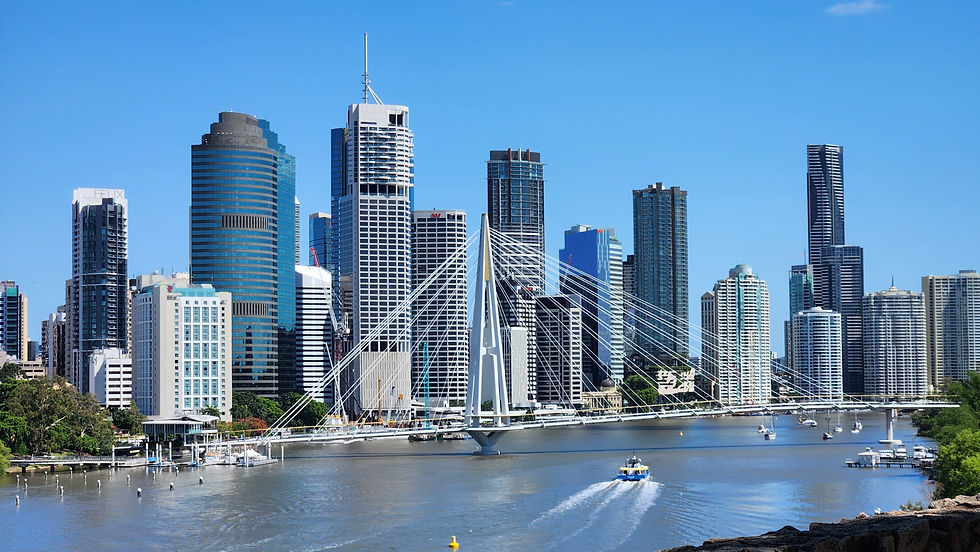
Kenyan learners can undergo a transformational experience that will enable them to become global-minded citizens capable of helping Kenya achieve social and economic growth. The essay focuses on the factors that make Brisbane's diversity beneficial to Kenyan students, enabling them to develop their cross-cultural competence and become instigators of Kenya's sustainable future.
Brisbane is considered one of the most eclectic Australian city, where diverse communities from over 200 nationalities and more than 180 languages are found. This diversity can provide a good social enrichment atmosphere, whereby the international students will be in a position to socialise with different cultures and open up to each other. state that this kind of multicultural cities like Brisbane creates hospitable spaces in the urban environment where refugees, migrants and international students can live, study and enhance cultural peace and inclusivity. This exposure among Kenyan students leads to their cultural awareness and open-mindedness that will help them integrate into the global systems without feeling that they have a sense of self-identification.

International students in Brisbane perceive the city as a friendly centre that promotes social justice and inclusion. This diversity in the city also contributes towards Kenyan students feeling respected and wanted, thus reducing the risk of cultural alienation. Typically, this informal atmosphere provides a safe space for self-realisation, teamwork through community organisations such as Berur Organisation, Kenyans In Queensalnd, and educational achievement. In addition, through an active involvement in multicultural activities, socialising, the event and university societies, Kenyan learners will have an inter-cultural network, which will empower their adaptability and cross-cultural communication abilities as the primary resources of global leadership and development.
Likewise, flexibility is a key attribute to success in a globalised world, and the multicultural weave of Brisbane form an interactive curriculum for this attribute. According to Gilani, Waheed, and Hussain (2020), flexibility, empathy, and problem-solving are areas embraced in multicultural educational settings because of the varying social and educational environments that students have to deal with. In the case of the Kenyan students, socialising with students of Asia, Europe, and Latin America improves their strong skills in cultural sensitivity, bargaining of meanings and healthy collaboration. The competencies are priceless in the more globalised Kenyan economy, where cross-cultural communication is required in trade, diplomacy and innovation. Academic references highlight that emotional and cultural intelligence constitute the most important consequences of such interactions based on multiculturalism. The Kenyan students are emotionally mature and tough, which enables them to deal with stress, ambiguity, and cultural differences in constructive ways due to their exposure to the different environment Brisbane has to offer them. Such adaptive traits are not exclusive to the academic sphere; they equip the students with the capability to serve in the leadership positions of both the Kenyan government and the Kenyan business environment, where either good communication or inclusion is the key tool of transformation.
Nonetheless, the Brisbane institutions of higher learning such as the University of Queensland and the Griffith University are engaged in activities aimed at encouraging multicultural learning programs that enable intercultural dialogue and mentorship. It is through such undertakings that Kenyan students can possess the resources needed to overcome the complex global challenges without the worry of compromising their integrity. The final result of such experiences is the creation of internationally competent graduates who can smoothly harmonize the local realities in Kenya and the international best practices.

These institutions of higher learning offer an enabling environment that allows for the academic and social well-being of the international students. The institutional support concerning the instances of multiculturalism is inseparably connected with the well-being of students, which can be enhanced with the help of mental health, counselling, and cultural integration. Another element, which Kenyan students find supportable, is to have inclusive policies of the university and multicultural student offices because they are at home and members of the organisation.
The African students in Australia tend to struggle with adjusting to the culture, but they can be incredibly resilient with the same access to resources. Community organisations such as the Study Brisbane and International House have been undertaking networking and cultural exchange roles in Brisbane where the students are offered the opportunity to interact, form friends, and gain self-confidence. The experiences allow flexibility skills, and leadership because Kenyan students can adapt to new social systems without losing the culture.
Multiculturalism is not only about coexistence but about collaboration and contribution as well. The Kenyan students who study their degrees in this city are integrated into the community-building schemes, volunteerism and leadership schemes that enhance their civic sense and proficiency in the world. Cross-sectoral collaboration can foster flexibility and newness among the students in the international placements and service-learning experiences. These activities will boost the awareness of students on global issues such as climate change, inequality, and sustainable development, which are particularly sensitive to the development agenda of Kenya. These experiences are forming so-called "global" citizens who think globally and act locally. This mindset is echoed in the Kenyan students who return to Brisbane and take a global view on issues that afflict the locals, like unemployment, governmental reforms and inclusion into the society. They are decision-makers in international and local knowledge systems, or rather, they should be perceived through the cultural intelligence prism through which remedies to developing Kenya are based on innovation.
Besides, the city nurtures multicultural flexibility that directly influences the Kenyan development as human capital. Remittances, investment and knowledge transfer have also turned the Kenyan diaspora into a development pillar in the country. Kenyan graduates who study in Brisbane can be positioned to make a meaningful contribution to the process by directing their international competencies, which include technology, education, and governance. They are also better qualified in cross-cultural and cross-system operations, and this makes Kenya more competitive in the international markets.

In addition, intercultural flexibility will make leadership inclusive, which is a quality that is most needed, especially in the context of addressing Kenya in the unique social and political environment. Attitudes of caring, collaboration, and openness in multicultural students who have undergone multiculturalism during their education allow them to bring improvements to the institution, as well as develop social cohesion. They help in the establishment of diversity and innovation through the adoption of multicultural opinions in set-ups, especially at workplaces and systems of governance in Kenya.
The Brisbane multicultural setting offers Kenyan students an opportunity to enhance their adaptability, cultural competency, and global competence. Its non-discriminatory systems and networks, which are diverse, instil leadership and power. The acquired experience will enable graduates in Kenya to solve the socio-economic problems, become united, and promote innovation. Furthermore, Brisbane eventually makes them conscious people of the world who are contributing towards ensuring a safer and more prosperous Kenya in the future.
Edited/ Published By Nehemiah Kipserem MEd-MBA 2025.


Comments